
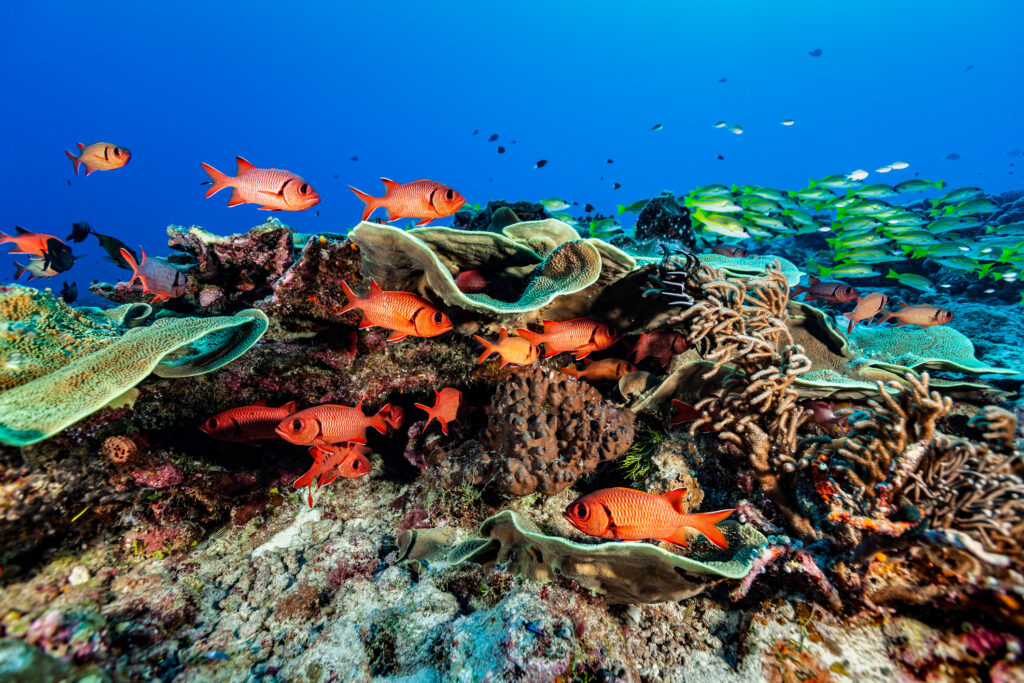
Hiding beneath the waves of the ocean are huge tropical structures known as coral reefs. Found all over the world, from the coast of Alaska to the warm waters of the Caribbean Sea, the coral reefs found today are between 5,000 to 10,000 years old.
These ancient structures are some of the most colourful and biodiverse ecosystems on the planet. In fact, coral reefs are often called the “rainforests of the sea” because of the sheer number of species that live there.
This blog will explore the extraordinary animals that live within coral reefs, how they’ve adapted to these vibrant environments, and some fascinating facts about them.
What are coral reefs and why are they important?
A coral reef is a remarkable, living structure formed by colonies of tiny coral polyps. These small animals secrete calcium carbonate, which hardens into the skeletal structure that builds the reef over thousands of years. Put simply, healthy coral equals a healthy reef.
Coral reefs are incredibly important to the planet and its oceans. Although they cover less than 1% of the ocean floor, these structures create habitats for thousands of marine species, supporting around 25% of all marine life. This makes them a critical component of the oceanic ecosystem. Not only do they provide food, shelter, and protection for marine species, but they also act as natural barriers, protecting coastal areas from storm surges and erosion.
What animals live in coral reefs?
Coral reefs are home to an astonishingly diverse range of marine animals, with estimates of over thousands of species in total. The vibrant colours and complex structures of the reef offer both perfect camouflage and essential resources, making it a bustling underwater city for a huge variety of life.
Coral reef fish
Clownfish
Clownfish (Amphiprioninae) are small, instantly recognisable fish found in the warm waters of the Pacific and Indian Oceans. They have developed an incredible symbiotic relationship with sea anemones. The clownfish is immune to the anemone’s sting and lives safely amongst its tentacles. This is mutually beneficial since the clownfish gains essential shelter and protection from predators, while the anemone benefits from the clownfish cleaning it and even bringing it food scraps.
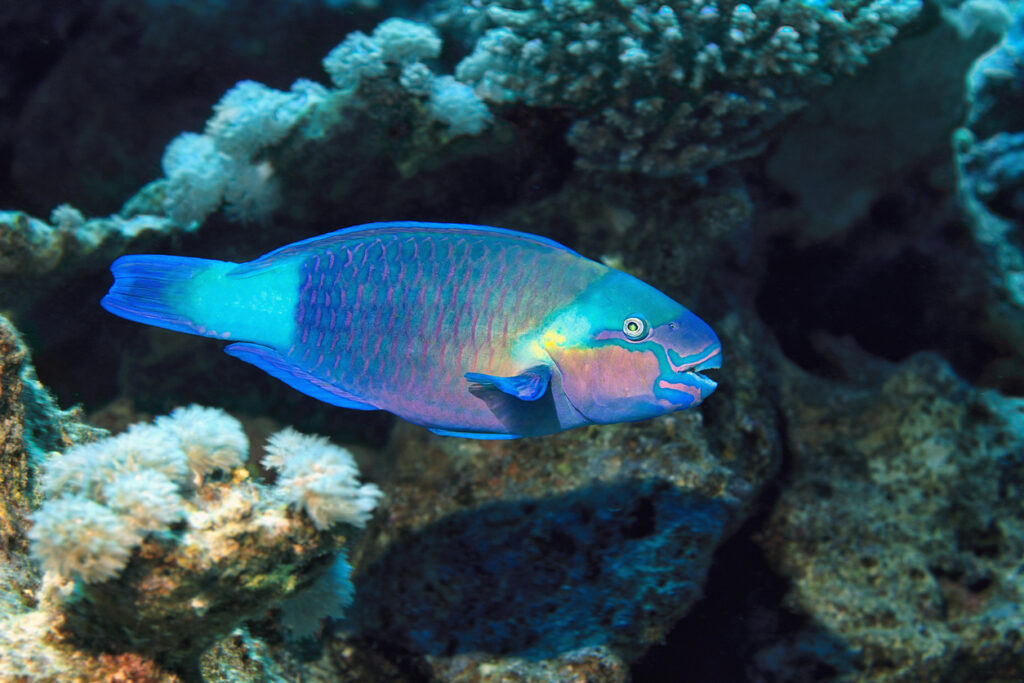
Parrotfish
Parrotfish (Scaridae) are common inhabitants of tropical and subtropical reefs worldwide, often preferring shallow, sunlit waters. They are crucial for maintaining the reef’s health. Using their distinctive beak-like teeth, they scrape algae and dead coral from the reef surface. This feeding behaviour keeps the coral clean and healthy, a vital job for the entire ecosystem.
Butterflyfish
You can find butterflyfish (Chaetodontidae) on tropical and subtropical reefs across the Atlantic, Indian, and Pacific Oceans. They are easily recognisable due to their bright colours and distinctive eye-like spots, which serve a crucial purpose: confusing predators and allowing the fish to escape. They feed mainly on small invertebrates and coral polyps.
Angelfish
Angelfish (Pomacanthidae) inhabit warm, shallow reef waters across the Indian, Pacific, and Atlantic Oceans. Their bright colours and flattened bodies are the key adaptations that allow them to move easily and quickly between the tight crevices and branches of the coral.
Surgeonfish
Surgeonfish (Acanthuridae) are common throughout tropical coral reefs, particularly in the Indo-Pacific region. They get their name because many species have sharp spines or “scalpels” located near their tails, which they use purely for defence. These fish are important grazers on the reef, feeding on algae and helping to keep the reef ecosystem balanced.
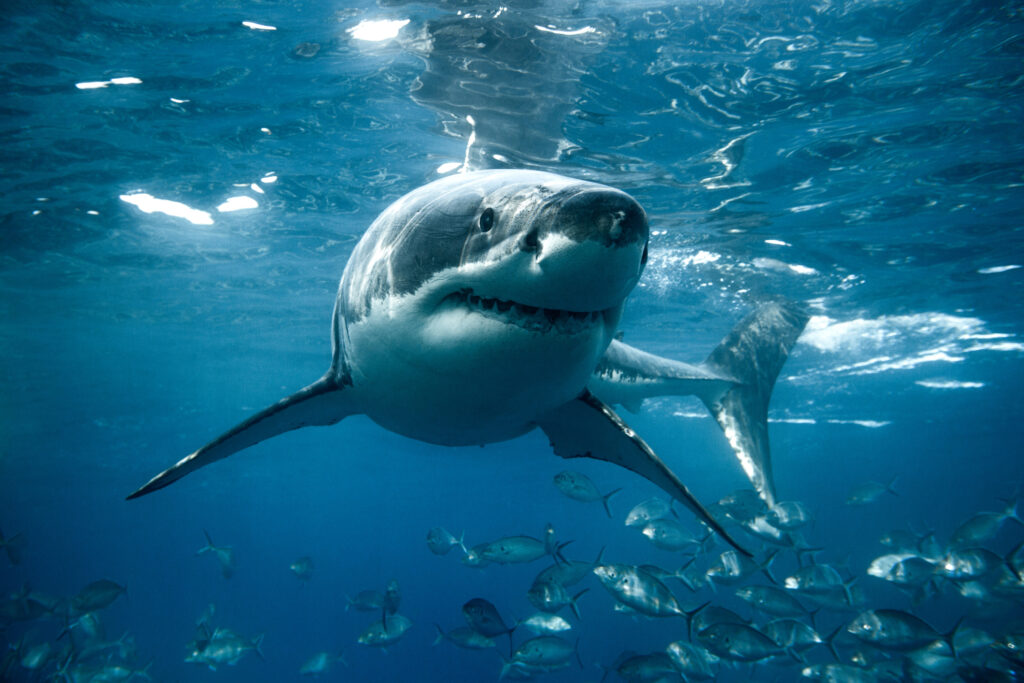
Sharks
Numerous species of sharks live within coral reefs, including the blacktip reef shark (Carcharhinus melanopterus), grey reef shark (Carcharhinus amblyrhynchos), and nurse shark (Ginglymostoma cirratum). They are crucial for the ecosystem as apex predators; their role is to control the populations of other reef residents. Without them, the ecosystem can become unbalanced, which can ultimately harm coral reef health.
Manta rays
Manta rays (Mobula birostris) are one of the most graceful animals on the reef. These gentle giants are filter feeders that glide through the open reef waters, consuming plankton. They often gather at specific spots known as “cleaning stations”, where smaller fish and shrimp remove parasites from their skin.
Marine reptiles
Sea turtles
Green (Chelonia mydas) and hawksbill turtles (Eretmochelys imbricata) are among the most common reef visitors. They use the coral for feeding, resting, and shelter. Hawksbills, in particular, are known to eat sponges, which helps to maintain the fragile coral balance. When they are resting in coral crevices, turtles have the ability to hold their breath for extremely long periods because they cannot breathe underwater.
Sea snakes
Several species of highly adapted sea snakes (Hydrophiinae) are found within coral reefs across the Indo-Pacific. They are often active hunters, using the complex reef structure to ambush small fish and eels.
Coral reef invertebrates
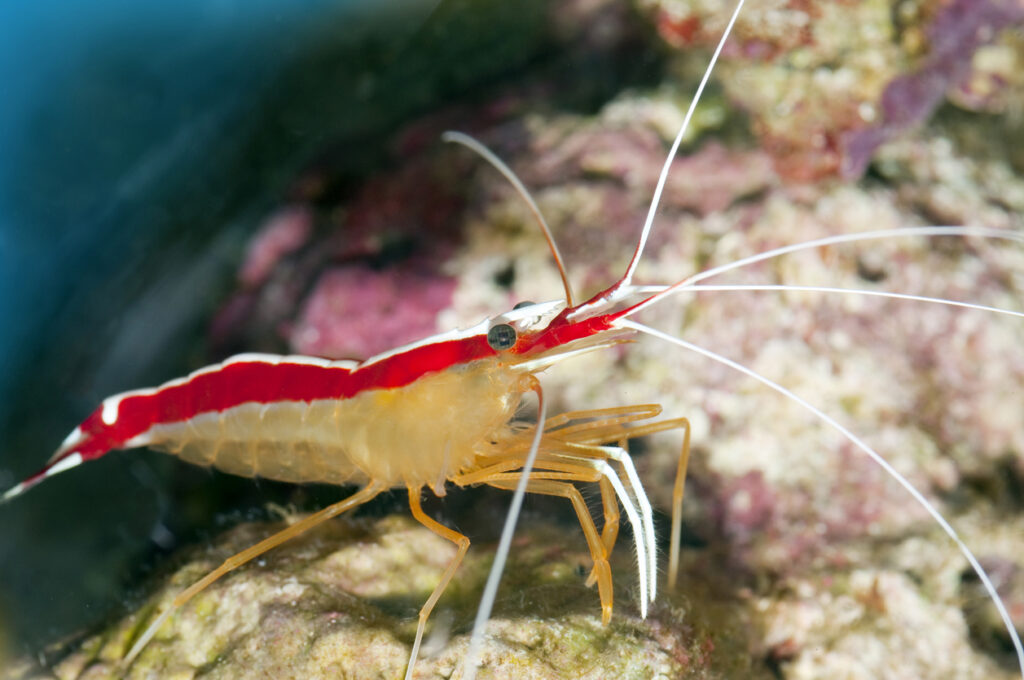
Cleaner shrimp
Cleaner shrimp (Lysmata amboinensis) are found among coral and sea anemones. They play a key role as “reef cleaners”, setting up stations where they actively remove parasites and dead tissue from larger fish. They form symbiotic relationships with fish such as moray eels and groupers, which benefit from the cleaning service and do not eat the shrimp.
Starfish
Starfish (Asteroidea) can be found clinging to coral or rocky surfaces all over the reef. They are carnivores and omnivores, feeding on small molluscs and detritus. By doing so, these echinoderms help to keep the reef floor clean.
Sea urchins
Sea urchins (Echinoidea) are spiny grazers that feed on algae, which is another crucial task on the reef. By keeping the algae populations in check, they prevent it from smothering and killing the coral. They are nocturnal and often hide in reef crevices during the day for protection.
And so many more
The list of animals living within coral reefs is nearly endless. Other remarkable residents include whales (visiting migratory species), the fascinating lined seahorse, lionfish, triggerfish, and even different species of seabirds that rely on the reef for food.
The coral reef is a truly remarkable ecosystem, housing a dazzling variety of marine animals that have evolved incredible ways to survive and thrive. From the tiny polyp that builds the reef to the majestic manta ray that glides above it, the “rainforests of the sea” offer a glimpse into the wonderful complexity of ocean life.
To spot many of these beautiful coral reef animals up close and learn more about their importance, be sure to plan your visit to the aquarium. You can secure your tickets here and check out our daily talks and feeds for an even deeper dive into the marine world.