
The tiger salamander (Ambystoma tigrinum) is one of the most fascinating creatures we have at Hastings Aquarium, brilliantly bridging the gap between land and water habitats like almost no other.
We wanted to shine a light on this remarkable amphibian and what exactly makes it so extraordinary, so let’s take a closer look at a creature that you might otherwise fail to spot!
What is a tiger salamander?
The tiger salamander is a standout member of the genus Ambystoma, a group known for producing large, land-dwelling mole salamanders.
In the past, these animals were classified under a single, unified species, but modern genetic research has split them into distinct regional species and subspecies based on their unique traits and geographical locations.
On a genetic level, tiger salamanders are very closely related to axolotls (Ambystoma mexicanum); however, while axolotls remain in water their entire lives, tiger salamanders spend their adult lives almost exclusively on land close to water.
Tiger salamander subspecies
While they share a common lineage, tiger salamanders vary significantly depending on where they are found across North America. There are four main subspecies of tiger salamander.
Eastern tiger salamander
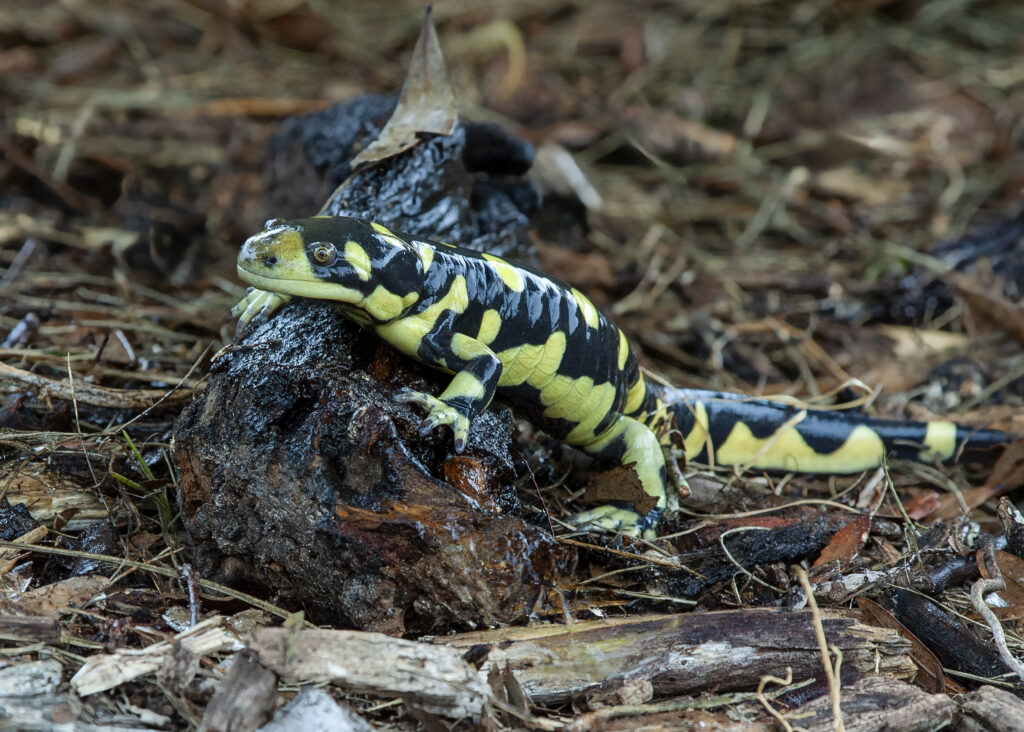
The eastern tiger salamander (Ambystoma tigrinum) is one of the largest species of salamander in North America. It’s known for its dark body adorned with bright yellow spots or bars, thriving in forests and grassland across the eastern United States.
Western tiger salamander
On the western side of the United States, you’ll find the western tiger salamander (Ambystoma mavortium). As well as the geographic differences, the western tiger salamander has more connected yellowish bars or stripes across its body.
Barred tiger salamander
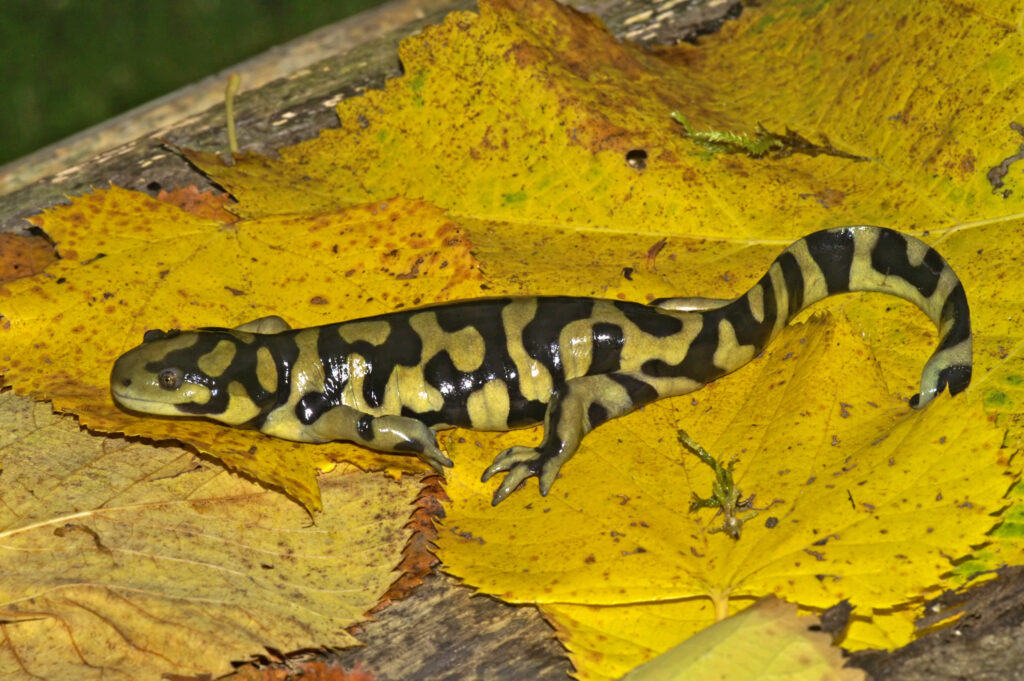
Featuring distinct black and yellow markings across their bodies, the barred tiger salamander (Ambystoma mavortium) is heavily concentrated in the central and southwestern United States.
California tiger salamander
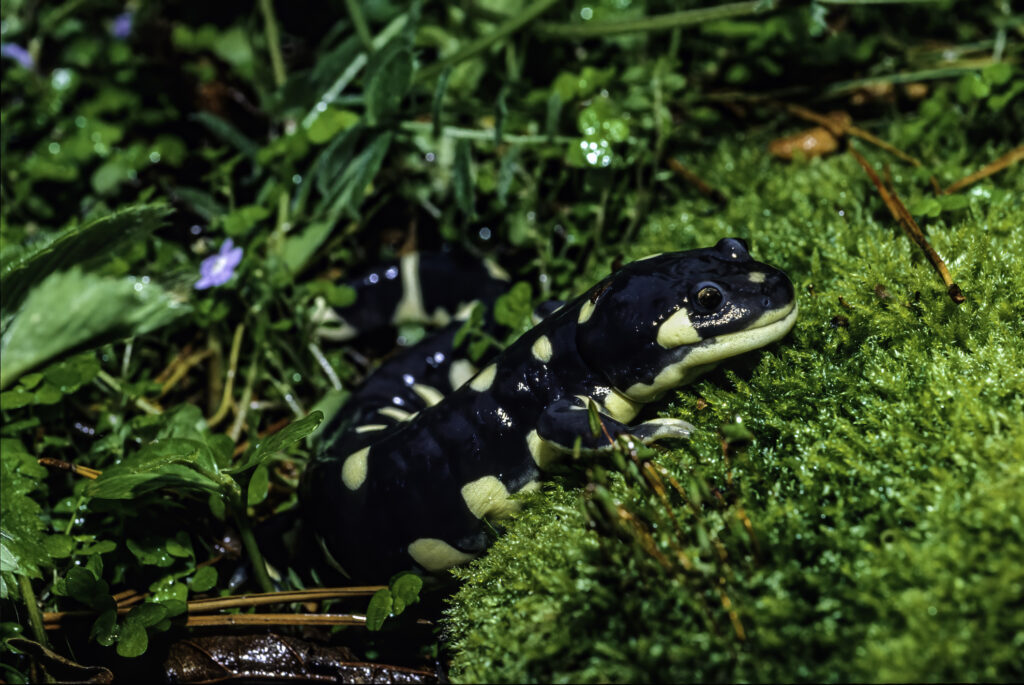
A highly localised and probably the most vulnerable species of tiger salamander, the California tiger salamander (Ambystoma californiense) can be recognised by its distinct, stark white or pale yellow spots against a jet-black body.
7 must-know facts about tiger salamanders
Tiger salamanders demonstrate excellent and interesting adaptations which allow them to thrive in various environments across the United States.
1. They are underground experts
Adult tiger salamanders spend the vast majority of their lives living in subterranean burrows. They frequently live up to two feet beneath the surface, utilising small tunnels to escape the heat of the day and stay moist. Because of this secretive lifestyle, you are far more likely to find them buried in the earth than wandering in the open.
2. Water is reserved for romance
Because they spend adulthood on land, tiger salamanders only return to the water for a very specific reason: to breed. Every spring, heavy rains trigger a mass migration. Adults leave their underground sanctuaries and head to temporary ponds or slow-moving streams to lay their eggs, ensuring the next generation starts life in a safe aquatic environment.
3. Their skin doubles as a lung
As a highly adaptive species, their entire bodies are built for survival. Aside from having sturdy, robust limbs designed perfectly for digging through soil, they possess a unique respiratory trick. Tiger salamanders have the incredible ability to absorb oxygen directly through their highly permeable skin, helping them breathe while buried deep underground.
4. They undergo a dramatic metamorphosis
Every tiger salamander larva begins life entirely as an aquatic amphibian, complete with feathery external gills and a finned tail designed for swimming. Over several months, they undergo a physical transformation known as metamorphosis. During this process, they shed their gills, grow legs, and develop fully functioning lungs to prepare for life on land.
5. Sometimes, they refuse to grow up
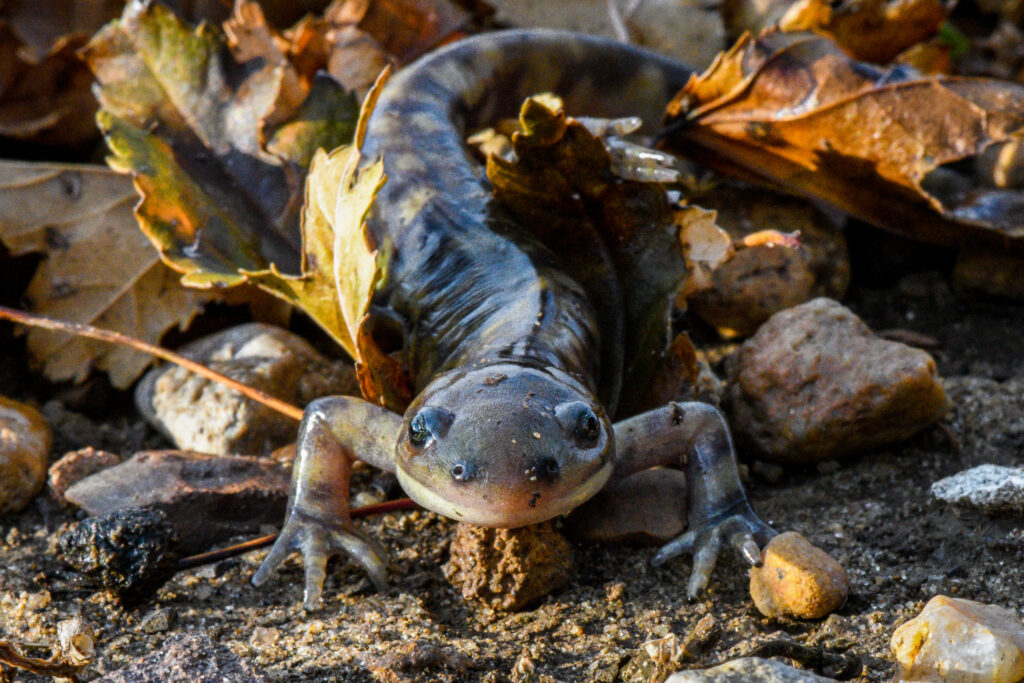
In rare instances, environmental conditions can cause a glitch in their development. When a tiger salamander’s metamorphosis fails, often due to cold water temperatures or a lack of iodine, they undergo a phenomenon called neoteny. This means they reach sexual maturity and live out their entire lives while retaining their larval features, including their aquatic gills.
6. They are ambitious carnivores
Don’t let their slow movements fool you; these amphibians are aggressive predators. As larvae, they consume small aquatic invertebrates and insect grubs. Once they reach adulthood and grow into their larger size, their diet expands significantly. They will eat almost anything they can overpower, including worms, large insects, frogs, and even small mice.
7. They carry a toxic defence system
To protect themselves from becoming a snack for larger predators, tiger salamanders have a built-in defence mechanism. When threatened, glands located on their backs and tails release a milky, toxic substance. This toxin tastes terrible to predators and can be harmful if ingested, serving as a highly effective deterrent.
8. Not endangered
The good news for these resilient creatures is that the tiger salamander is currently classed as a species of ‘least concern’ on the global conservation scale, showing that their underground lifestyle serves them well.
Spot an Eastern tiger salamander at Hastings Aquarium
If you want to see the beauty of the eastern tiger salamander up close, you don’t have to go digging around in the North American wilderness. You can find our very own resident salamander thriving right here at Hastings Aquarium.
You can visit this incredible animal inside our immersive Jungle Room exhibit, where we have carefully recreated the humid, terrestrial environment they need to thrive.
Planning a visit to see our tiger salamander and the rest of our amazing aquatic residents is simple; book your tickets now to secure your trip to Hastings Aquarium.
From their secret underground lives to their incredible physical transformations, tiger salamanders are a testament to the wonders of amphibian evolution. They prove that there is always more than meets the eye when it comes to the natural world