
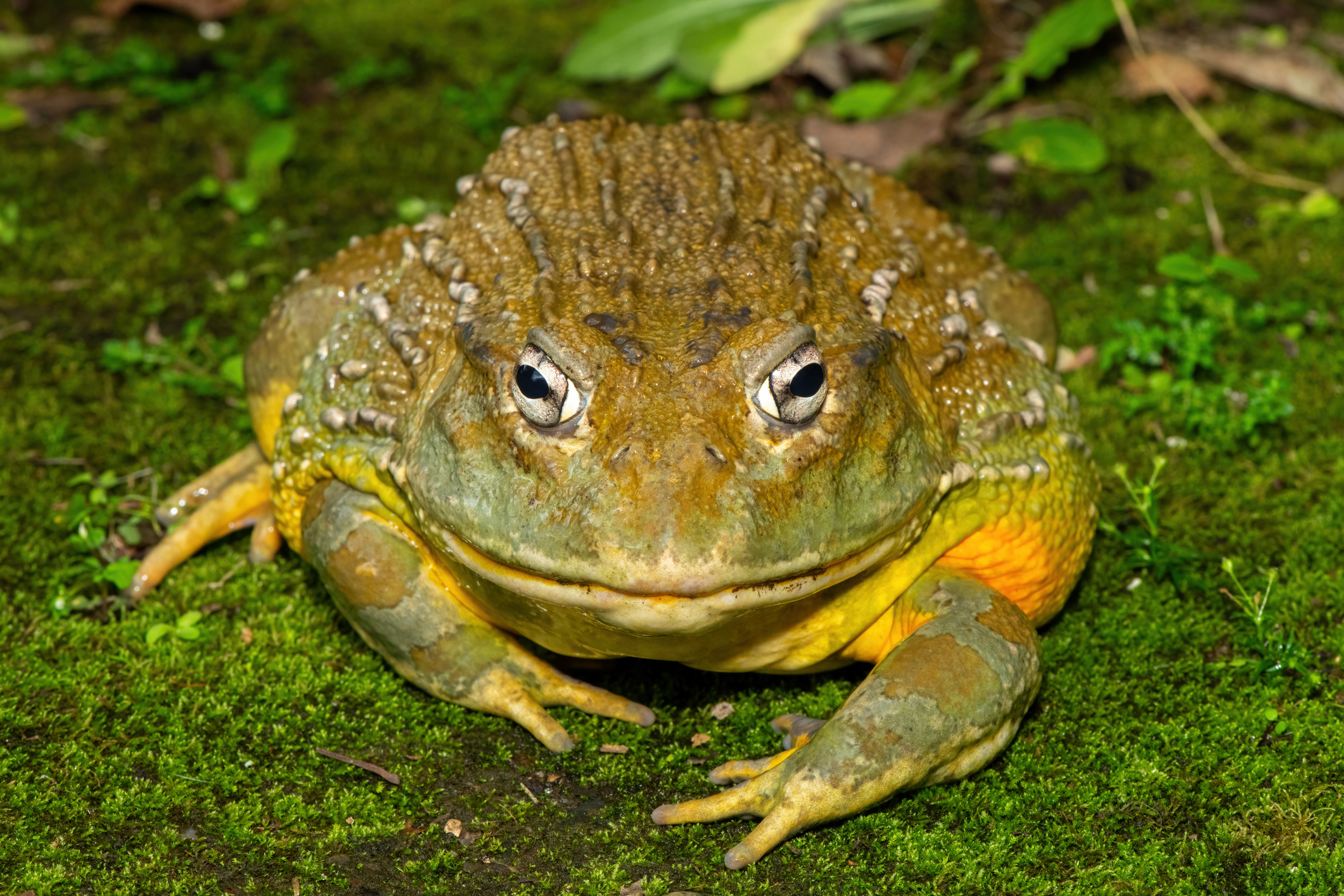
The African bullfrog (Pyxicephalus adspersus) is a massive, burrowing amphibian known for its enormous size, equally large appetite, and their incredibly protective parents. This impressive frog is often called the giant African bullfrog because of its immense size. You might also hear it called the pixie frog, a playful nickname inspired directly by its scientific genus (Pyxicephalus).
African Bullfrog Size and Physical Appearance
As one of the largest frog species on the planet, these round, olive-green amphibians are built like miniature tanks. With distinct cream or yellow-orange throats, they’re easy to spot and also help distinguish between the females and the much larger males. Female African bullfrogs have a creamy-white or beige throat compared to the brighter hue on a male’s throat.
Younger frogs are particularly bright, sporting a vivid yellow stripe right down their backs. Remarkably, they are among the only frogs to have sharp, tooth-like projections on their lower jaw called odontoids, which they use to catch their prey.
Native Habitat
In the wild, African bullfrogs are native to the vast savannas, shrublands, and tropical swamps stretching across Central and South Africa. They thrive in countries like Botswana, Mozambique, and South Africa, where the weather can be incredibly unpredictable. While they are experts at tolerating hot, dry conditions, they rely heavily on shallow, temporary pools and flooded areas created by seasonal rains to breed and lay their eggs, and also keep their skin moist.
African Bullfrog Behaviour
Possessing some of the most surprising behaviours in the animal kingdom, African bullfrogs survive the scorching dry season by burying themselves underground for up to ten months, forming a moisture-retaining cocoon out of their own skin. When the rains return, they emerge to breed, and the males take on the role of incredibly devoted parents. If their temporary breeding pool begins to dry up, a father bullfrog will use his head and powerful legs to dig a rescue tunnel to a nearby pond, saving his stranded tadpoles.
Diet and Hunting
When it comes to dinner, these voracious carnivores are not picky eaters. They use an ambush hunting strategy, sitting perfectly still and waiting for any passing meal to appear in their line of sight. They will eat almost anything that can fit inside their powerful, wide jaws, including insects, small rodents, reptiles, birds, and even smaller frogs. To help swallow these massive meals, they actually pull their own eyes down into their sockets to push the food down their throats.
African Bullfrog Conservation Status
The global wild population is currently classified as Least Concern on the IUCN Red List, meaning they are not currently at risk of extinction. However, they still face modern challenges in the wild, particularly from habitat loss and urban development stripping away their vital seasonal wetlands.
Find us in the Jungle Room!
You can come face-to-face with this spectacular amphibian right here at the Hastings Aquarium inside our tropical Jungle Room exhibit! Watching these master burrowers up close is an unforgettable experience for the whole family, offering a unique glimpse into the wonders of tropical wildlife. Plan your next family adventure and book your tickets online today.
Type
Amphibian
What do they eat?
Insects, small rodents, reptiles, birds, and even smaller frogs
Size
Up to 23-25cm (males)
Water Type
Freshwater, including savannas, shrublands, and tropical swamps
Where are we?
Central and South Africa